
Research
Dive into some of the ongoing, collaborative research projects that I am currently working on or have recently completed. I am committed to research that includes elements of public scholarship, advocacy, and/or artivism; professional learning opportunities for educators; connections with teachers and students in K-12 or pre-service teacher education settings; mentorship of graduate students; and collective, feminist approaches to research.
Ongoing and Recent Research Projects

This project is supported by a SSHRC Insight Development Grant.
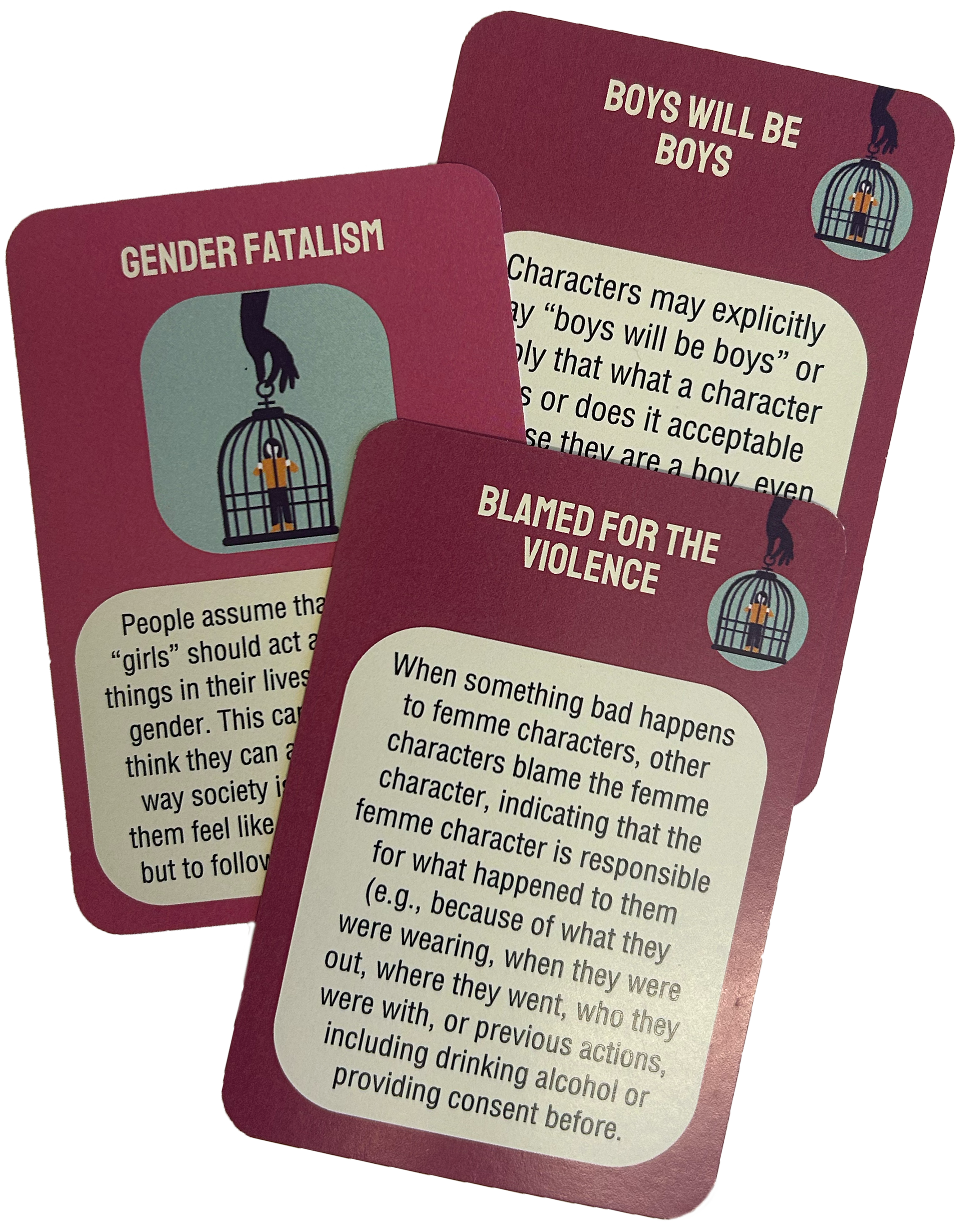
For a moment, let us imagine if the unequivocal and undisputed answer tot he question, “do we, as a society, want to end gender based sexual violence (GBSV)” was simply “yes”. We would then prioritize resources, including research and knowledge mobilization to accomplish an end to GBSV. Some of the first places we would look toward for implementing this change would be our educational system and through our popular media. This ongoing research project conducted as a feminist collective of researchers and K-12 educators is making it clear that the answer to whether society and our schools are actively contributing to ending sexual violence is far from a simple yes. See more details about the study background and rationale here.
We Interrupt this Programming: Confronting Gender Based Sexual Violence Through Critical Media Literacies in K-12 Schools
Principal Investigator: Dr. Jennifer Watt
Co-Principal Investigator: Dr. Shannon Moore
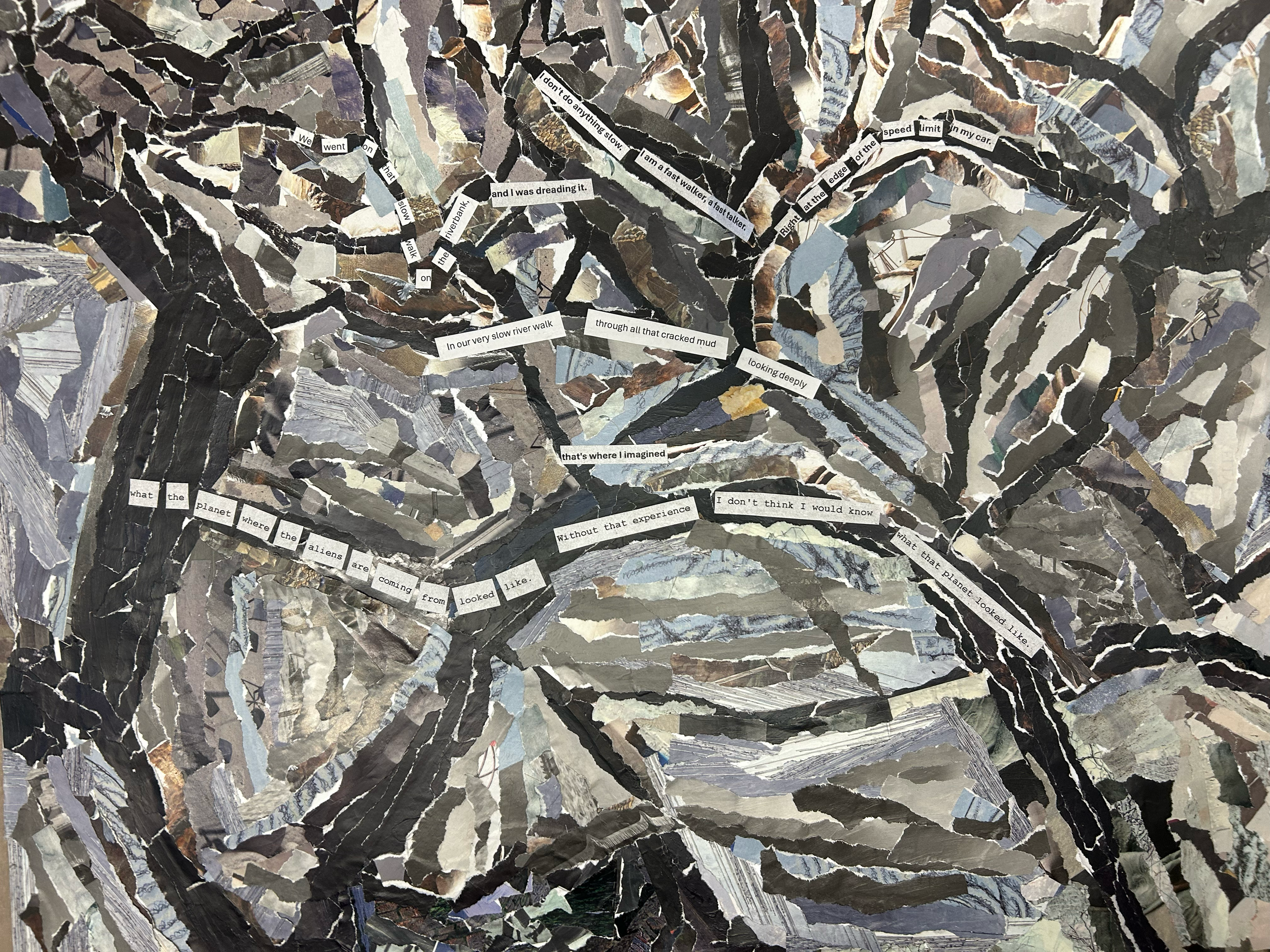
Ripple Effects & Place Writing and Walking Research
Co-Principal Investigator: Dr. Jennifer Watt (University of Manitoba)
Co-Principal Investigator: Dr. Michelle Honeyford (University of Manitoba)
Ripple Effects Place Project Inquiry Study
The purpose of this exploratory study is to learn from teachers from the 2025 SWI about their experiences teaching about water and issues of water (in)justice in their schools and communities through ore relational pedagogies, including going outside, a walking curriculum, and multimodal writing. In this study we offered the options of participating in focus group that met for one conversation, an inquiry group that met for a series of three conversations, which provided sustained opportunities to share and inquire into their experiences enacting their projects within a range of contexts, and what they might be encountering as writers/educators in the process. Focus and inquiry group conversations took place between March and June 2026.
Place-Writing and Place-Walking in Educational Contexts: Reflections on Practice
During the summer of 2024, we invited individual and group conversations over Zoom with past SWI participants (2018, 2021, and 2023). The “big questions” for the conversations were shared with participants in advance included: 1) What has come to matter to you as a writer and teacher of writing, and why? 2) What are you trying to make room for in your writing and teaching of writers, and how? 3) What do you find exciting? Where do you hope to go/grow as a writer/teacher of writing? 4) What has been challenging? What might help address those challenges?
This project is supported by a SSHRC Connections Grant.
Following the River: Literacies Learning Across the Prairies
Principal Investigator: Dr. Lori McKee (University of Saskatchewan) Co-Investigators: Dr. Jacquie Flipek (King’s University College), Dr. Katie Brubacher (University of Alberta), Dr. Michelle Honeyford (University of Manitoba), and Dr. Xiaoxiao Du (University of Manitoba)
The Prairie Literacies Project was formed by a group of literacies researchers and teacher educators in Alberta, Saskatchewan, and Manitoba and seeks to understand and promote expansive literacies across the prairies in light of a narrowing instructional context. We understand literacies as multidimensional, multilingual, multimodal, material, embodied, situated, and relational. We are attuned to prairie literacies in contex and celebrate the diversity of peoples, communities, and geographies of the region. In April 2026, we held a Following the River Symposium in Saskatoon, SK that brought together educators, researchers, community members, Elders, artists, and students for two days of shared learning grounded in story, place, language, and relationship (see more about the FtR Symposium here).
This project was funded by a SSHRC Connections Grant. We also acknowledge support from the University of Manitoba Faculty of Education, the University of Manitoba Centre for Human Rights Research, and Brandon University’s Centre for Applied Research and Education in Rural and Remote Settings.
Re-Imagining Literacies Assessment
Principal Investigator: Dr. Michelle Honeyford (University of Manitoba)| Co-Investigators: Dr. Jennifer Watt (University of Manitoba) & Dr. Burcu Ntelioglou (Brandon University)
The Re-Imagining Literacies Assessment project was a series of webinars, podcasts, and in-practice papers with the goal of mobilizing language and literacy education research for the purpose of:
• Examining issues of power and (in)equities related to language and literacies curriculum, pedagogy, and assessment
• Proposing more equitable, inclusive, and decolonizing approaches through re-imaging, re-thinking, and re-conceptualizing language and literacies learning and assessment
• Contributing to change in assessment policy and practices in language and literacies education.
In the project, we collaborated with a working group of 11 Manitoba educators who responded to webinar guests, participated in creating the working papers and the final two episodes of the podcast series, and collaboratively engaged in a manifesto-ing process as part of a Re-Imagining Literacies Symposium that we hosted at the Faculty of Education at the University of Manitoba in April 2024.
This project is supported by a SSHRC Insight Development Grant.
A Decolonizing Exploration of Anti-Racist, Arts-Based Responses to Violence Described in the MMIWG Report Across the Context of Higher Education
Principal Investigator: Dr. Kendra Rieger (Trinity Western University, Faculty of Nursing) Co-Principal Investigator: Dr. Lisa Borque-Bearskin (Thompsons Rivers University, Faculty of Nursing) Manitoba Pod Members: Brenda Longclaw (Elder), Dr. Francine Morin (University of Manitoba, Faculty of Education, Co-Applicant), Dr. Jennifer Watt (UM, Faculty of Education), Dr. Katya Adamov Ferguson (UM, Faculty of Education), Rhonda Campbell (UM, Faculty of Nursing).
Meaningful educational response strategies to the MMIWG2S+ are needed, and art holds potential for transformative learning. Our interdisciplinary research collective of Indigenous peoples and settlers is developing, implementing, and evaluating arts-based, anti-racist strategies to support nursing and education students in engaging with and responding to the MMIWG2S+ Report at three Canadian universities (TWU, Thompson Rivers University, and University of Manitoba). We are asking the research question: How can anti-racist, arts-based educational initiatives foster students’ understanding of MMIWG2S+ Calls to Justice and respond to community needs? Through the co-creation of arts-based responses, a blogsite, a case book for educators, visual infographics, academic articles, and an expanded research team, new paths will be forged for emerging professionals to understand the impacts of Indigenous-specific racism and develop cultural humility, an essential precursor to creating culturally safe spaces.
Publications
-
Honeyford, M., & Watt, J. (2026). “This was a really tough year in terms of global crises”: Walking and writing as ethical and emergent literacy practices in English Language Arts. English Teaching: Practice and Critique, 1-14.https://doi.org/10.1108/ETPC-09-2025-0209
Honeyford, M., & Watt, J. (2025). Writing relationalities: Relational orientations to teaching writing—moving pedagogies and practice. Literacy, 59(1), 108-117. https://doi.org/10.1111/lit.12392
Honeyford, M., Watt, J., Roche, S., Cain, N., & Ferguson, K. A. (2024). Affectively de-composing: Hope in movement, movie-making, and soil art. Pedagogies: An International Journal, 1 21.https://doi.org/10.1080/1554480X.2024.2435921
Honeyford, M., & Watt, J. (2024). What’s the use?: Undoing, decolonizing, liberating, and righting literacies assessments in turbulent times. Language & Literacy, 26(3), 137 154.http://doi.org/10.20360/langandlit29724
King, D., & Watt, J. (2024). Podcast creation in/as teacher education and self-study. Studying Teacher Education 21(2), 212-28. https://doi.org/10.1080/17425964.2024.2324784
Watt, J., Krepski, H., & Heringer, R. (2024). Middle school teachers’ perspectives of how service learning projects contribute to student well-being. McGill Journal of Education, 58(23), 225-247.https://10.26443/mje/rsem.v58i2.10048
Watt, J. (2020). Splashes of light: Parents of children with dyslexia explore experiences through visual arts. International Journal of Education Through Art, 16(1), 115-128. doi: https://doi.org/10.1386/eta_00020_1https://web-p-ebscohost-com.uml.idm.oclc.org/ehost/detail/detail?vid=1&sid=a52f7a4f-6774-4de8-a722-f1e0d9544e4f%40redis&bdata=JnNpdGU9ZWhvc3QtbGl2ZQ%3d%3d#AN=141531020&db=aft
Honeyford, M.. & Watt, J. (2018). Burrowing and becoming: Teaching writing in uncertain times. Pedagogies: An international journal, 13(3), 260-279. DOI: 10.1080/1554480X.2017.1399797http://www.tandfonline.com/eprint/KCI88SYvTeWW84Wsz4P5/full
-
Watt, J., Moore, S., King, D., Moore, C., Alevizos, S., Groot, M., Delago, A. (2025). I spy with my feminist eye: Collective feminist teacher leadership to confront and disrupt gender based sexual violence in schools. In C. Smith & Schnellert, L. (Eds.) Research in Teacher Leadership: Transformative and Contextualized Agency (pp.759-784). Canadian Association for Teacher Education. https://dx.doi.org/10.11575/PRISM/48117 https://prism.ucalgary.ca/server/api/core/bitstreams/dde64604-7a96-4f95-9ccf-ccd09507c31b/content
Morin, F., Watt, J., Ferguson, K.A., Borque Bearskin, L., Rieger, K., Lounsbury, K., Longclaw, B., Campbell, R., Johnson, S. (2025). An art-based decolonizing learning design using soil and sound: Insights from multiliteracies theory. In B. Peters (Ed). Arts-based multiliteracies for teaching and learning (pp. 47-74). IGI Publishing.
Watt, J. (2024). Kitchen tables and greenbelt writers: Flourishing writing in English language arts and beyond. In T. Falkenberg (Ed.) Well-being and well-becoming in schools (pp. 254-269). University of Toronto Press.
Hauseman, C., Falkenberg, T., Watt, J., & Krepski, H. (2024). Developmental evaluation as a Tool for promoting well-being in schools: A case study. In T. Falkenberg (Ed.) Well-being and well-becoming in schools (pp. 178-196). University of Toronto Press.
Falkenberg, T., Krepski, H., Hauseman, C., & Watt, J. (2024). A complex adaptive systems approach to well-becoming in schools. In T. Falkenberg, (Ed.) Well-being and well-becoming in schools (pp. 197-216). University of Toronto Press.
Watt, J., Morin, F., Ruta Fontaine, G., & Collis, K. (2021). Lessons from leaders: A decade of flourishing in Winnipeg School Division’s Teacher Induction and Mentorship Program. In K. Walker, S. Cherkowski & B. Kutsyuruba, (Eds.) Positive leadership for school flourishing (pp. 201-214). Information Age Publishing.
Honeyford, M., & Watt, J. (2020). Practising place-thought and engaging in critical place inquiry in a public park: Listening, letting go, and unsettling our writing pedagogies. In K. Toohey, S. Smythe, D. Dagenais, & M. Forte, (Eds.) Transforming language and literacy education: New materialism, posthumanism, and ontoethics (pp. 32-53). Routledge.
Watt, J. (2018). Flourishing in all seasons: Thriving in discomfort and uncertainty. In S. Cherkowski and K. Walker, (Eds.) Perspectives on flourishing schools (pp. 23-36). Lexington Books.
-
Moore, S.M., & Watt, J. (2025, December 6). Education and gender-based violence. The Winnipeg Free Press [Op Ed].
Moore, S.M., & Watt, J. (2025, June 22). If we don’t teach about sexual assault and consent, popular media will. The Conversation. https://theconversation.com/if-we-dont-teach-youth-about-sexual-assault-and-consent-popular-media-will-256741
Force, V., & Watt, J. (2021). Prioritizing student well-being and well-becoming: Learning from WB2 initiative projects. Manitoba Association of School Superintendents (MASS) Journal, Spring 2021, 24-25. https://pdf.matrixgroupinc.net/masb/MASS-Journal-Spring-2021.pdf
Presentations
-
Moore, S., Watt, J., Lamb, H., & Martin, J. (2026, May). Cluster fuck: Barriers to enacting sex education in K-12 schools. CSSE 2026/ CATE/ACFE-CASWE. University of Winnipeg, Winnipeg, MB. May 31 – June 3, 2026.
Watt, J., Moore, S., Martin, J., & Lamb, H. (2026, May). Collective encounters: Confronting the challenges to teaching about consent, healthy relationships, and gender based sexual violence (GBSV) in K-12 schools. CSSE 2026/ CATE/ACFE-CASWE. University of Winnipeg, Winnipeg, MB. May 31 – June 3, 2026.
Honeyford, M., Watt, J., Sanford, K., Williams, B., Brydon-Miller, M., & Manitoba Writing Project Teachers. (2026, May). Ripple Effects: Teaching about water (in)justice through embodied, multimodal, and relational literacy pedagogies. [Symposium]. CSSE 2026/ LLRC/ACCLL. University of Winnipeg, Winnipeg, MB. May 31 – June 3, 2026. Stouffer, J., Du, X., Watt, J., Watson, E., Yaman Ntelioglou, B., Skuce, T., Janzen, M., & Balasubramaniam, P. (2026, June). Expanding literacy conversations in h/narrowing times. [Symposium]. CSSE 2026/ LLRC/ACCLL. University of Winnipeg, Winnipeg, MB. May 31 – June 3, 2026.
Watt, J., Honeyford, M., Quadri, S., & Hay, C. (2026, June). The writing [never] materialized: Collage analysis of becoming writers and teachers of writers in place. [Workshop]. CSSE 2026/ LLRC/ACCLL. University of Winnipeg, Winnipeg, MB. May 31 – June 3, 2026. Michelle was unable to attend this presentation, but we co-authored this presentation with student Research Assistants.
Honeyford, M., & Watt, J. (2025, December). Writing texts, writing acts: Research on becoming writers and teachers of writing in and outside of K-12 classrooms--collage/assemblage as productive action. Literacy Research Association Conference. Las Vegas, Nevada. December 3 - 6, 2025. I was unable to attend this conference, but we co-authored the presentation.
Honeyford, M., & Watt, J. (2025, December). (Re/de)composing pedagogies in K-12 practice: Literacy, agency, and meaning-making across the human/more-than-human divide. Literacy Research Association Conference. Las Vegas, Nevada. December 3 - 6, 2025. I was unable to attend this conference, but I contributed to writing the presentation.
Morin, F., Ferguson, K. A., Watt, J., Campbell, R., Longclaws, B., Rieger, K., & Bourque Bearskin, L. (2025, November). Calls for justice: Pre-service teachers’ learning about the MMIWG2S+ report through soil-based art and music. Ontario Music Educators’ Association Harmony 2025 Conference. Toronto, ON. I was unable to attend this conference, but I contributed to the presentation.
Honeyford, M., & Watt, J. (2025, October). Taking writing outside the classroom: Situated and relational writing pedagogy in teacher education. CATE Working Conference. University of British Columbia, Vancouver, BC. October 23 – 25, 2025.
Watt, J., & Moore, S. (2025, February). Putting our cards on the table: The compulsion and repulsion toward method in ethical sex education. Provoking Curriculum Conference. Calgary, AB. February 21-23, 2025.
Honeyford, M., & Watt, J. (2025, February). Surrender and catch as writers and teachers of writing: Collaging/assemblaging perspectives of imagining otherwise. Provoking Curriculum Conference. Calgary, AB. February 21-23, 2025.
Honeyford, M., & Watt, J. (2024, December). Write out place projects: Practitioner agency in making ‘good trouble’ through place-writing and walking curriculum practices. 2024 Literacy Research Association Conference. Atlanta, Georgia. December 4 – 7, 2024.
Honeyford, M., & Watt, J. (2024, December). Generative ‘thorny place’ and imagining ‘how else they could be’: Mobilizing and actuating agency in literacies assessment. 2024 Literacy Research Association Conference. Atlanta, Georgia. December 4 – 7, 2024.
Watt, J., Honeyford, M.A., & O’Hanlon, G. (2024, June). Place-writing and walking curriculum: Mapping writing invitations as social justice pedagogy and teacher research creation. CSSE 2024 CASJE. McGill University, Montreal, QC. June 12 – 17, 2024.
Honeyford, M., & Watt, J. (2024, June). Re-imagining literacies assessment: Undoing, decolonizing, liberating, righting, and reassembling assessment research, practice and policy. (Symposium presentation). CSSE 2024 LLRC. McGill University, Montreal, QC. June 12 – 17, 2024.
Watt, J., Moore, S., King, D., Moore, C., Alevizos, S, Groot, M., & Delago, A. (2023, October). I spy with my feminist eye: Leading against the pedagogical abandon of sexual violence and consent in K-12 classrooms. CATE Working Conference. Brandon University, Brandon, MB. October 12 – 14, 2023.
Honeyford, M., & Watt, J. (2023, June). Writing matters, place matters: A walking/writing curriculum experience. The 58th UKLA International Conference Writing Matters. University of Exeter, Exeter, England. June 23 – 25, 2023.
Honeyford, M., & Watt, J. (2023, June). Thinking with place-writing and walking as hopeful literacies. Sheffield Language and Literacies Conference: Forging Hopeful Literacies. University of Sheffield. Sheffield, England. June 16 – 17, 2023.
Falkenberg, T., Deer, F., Eblie Trudel, L., Hauseman, C., Kerr, J., Krepski, H., Link, M., Watt, J. (2023, May). Symposium-Panel Well-being and well-becoming in schools: Conceptualizing, contextualizing, curricularizing. (CSSE 2023 Conference CAFE). York University. Toronto, ON. May 27 – June 1, 2023.
Watt, J., & King, D. (2023, May). Podcast creation in/as teacher education: In(form)ing self-s study. CSSE 2023 Conference (S-STEP/CATE). York University. Toronto, ON. May 27 – June 1, 2023.
Watt, J., Ruta Fontaine, G., King, D., Sanguin, R. (2023, May). Learning from the long-term impact evaluation of Winnipeg School Division’s Teacher Induction and Mentorship Program. CSSE 2023 Conference (CASEA). York University. Toronto, ON. May 27 – June 1, 2023.
Watt, J., Moore, S., Moore, C., King, D., & Alevizos, S. (2023, March). ‘Not yet’ acknowledged: Making visible students’ experiences of gender-based sexual violence in schools through feminist media studies. Provoking Curriculum: Curricular Uncommonplaces. Western University. London, ON. March 23 – 25, 2023.
Honeyford, M., & Watt, J. (2019, November). Spirit of place-thought: An inquiry into our summer writing institute and what we learned about listening, letting go, and re-placing our writing pedagogies. National Council of Teachers of English Annual Conference, Spirited Inquiry. Baltimore, MD, United States. November 19 – 23, 2019. Dr. Honeyford was unable to attend this conference, but we co-authored the presentation.
Watt, J., Ruta Fontaine, G., Morin, F., & Collis, K. (2019, September). Lessons from leaders: A decade of flourishing in Winnipeg School Division’s Teacher Induction and Mentorship Program. Positive Leadership for Flourishing Schools Symposium. Kingston, ON. September 18 – 20, 2019.
Honeyford, M., & Watt, J. (2019, February). Unsettle and unsettling: An inquiry into knowing, writing, and teaching in place. Ethnography in Education Research Forum. Philadelphia, PA. I was unable to attend this conference, but we co-authored the presentation.
Watt, J. (2018, May). Practising vulnerability, discomfort, mindfulness, and compassion in teacher education. CSSE 2018 Conference (CATE). University of Regina. Regina, SK. May 26 -30, 2018.
-
Watt, J. & Moore, S. (2025, Nov. 27). We interrupt this programming: Confronting gender based sexual violence through critical media literacies in K-12 schools. Manitoba Professional Educators Network. Winnipeg, MB. Dr. Moore was unable to attend this conference, but we co-authored the presentation
Honeyford, M., Watt, J., Antonio, J., Beresford, M., Gadsby, M., Valois, C., Whelan, M. (2025, Nov. 27). The ripple effects of “write out” pedagogies. Manitoba Professional Educators Network. Winnipeg, MB.
Watt, J. & Moore, S. (2025, Nov. 24). We interrupt this programming: Confronting gender based sexual violence through critical media literacies in K-12 schools. University of Manitoba Faculty of Education Lecture Series. Winnipeg, MB.
Watt, J. (2025, Oct. 16). Literacies and ELA Curriculum Lunch and Learn. University of Manitoba Education Student Council. Winnipeg, MB.
Watt, J., Martin, K., & Kipe, E. (2025, Feb. 3). The “write” place to learn. Manitoba Council of Reading Clinicians. Winnipeg, MB.
Watt, J. (2024, Oct. 18). Sitting with sadness: Making space for trauma in middle years teaching and learning. St. John’s-Ravenscourt School. Winnipeg, MB.
Watt, J. (March 27, 2023). Making visible: Acknowledging students’ experiences of gender-based sexual violence in schools through feminist media studies. University of Manitoba Faculty of Education Lecture Series. Winnipeg, MB. [On behalf of research team: Moore, S., Moore, C., King, D., & Alevizos, S.]
Watt, J. (March 25, 2022). Perceiving learning disabilities through the hearts, heads, and hands of parents. 47e Congrès en Ligne: Coeur, Tête, Mains: Agir avec Bienveillance et Competence. Instuit des Trouble D’apprentissage (Learning Disabilities Institute). 60 minute recorded live/virtual session. Montréal, QC.
Honeyford, M., & Watt, J. (Jan. 27, 2021). Practising place-thought and engaging in place inquiry in a public space, Listening, letting go, and unsettling our writing pedagogies. Education and Social Research Institute. Manchester Metropolitan University. Virtual Talk. Manchester, England.
Watt, J. (Jan. 11, 2021). Fastening our oxygens masks first: Teacher well-being and well-becoming in a pandemic. Break-out session for EdCon. Faculty of Education, University of Manitoba. Virtual workshop. Winnipeg, MB.
Watt, J. (Nov. 17, 2020). Fastening our oxygen masks first: Teacher well-being and well-becoming in a pandemic. Manitoba Federation of Independent Schools, Supporting Remote Learning Professional Development Series. Virtual workshop. Winnipeg, MB.
Watt, J. (Sept. 14, 2020). Going public with podcasts. Faculty of Education Research Talk. Winnipeg, MB.
Watt J., & Honeyford, M. (Feb. 27, 2020). Literacy action and professional learning in ELA: Language as power and agency. Education for Action: Our Learning Journey. Manitoba Teachers’ Society and Manitoba Association of School Superintendents. Winnipeg, MB.
Watt, J. (Feb. 18, 2020). Works-in-progress: Flourishing as teachers (Imperfections included). Keynote address for EdCon, Faculty of Education, University of Manitoba. Winnipeg, MB.
Watt, J. (Jan. 20, 2020). Flourishing literacies: Conceptualizing curriculum for and as well-being and well-becoming. Faculty of Education Research Talk. Winnipeg, MB.
Honeyford, M., Watt, J., and the Teachers from the Manitoba Writing Project. (April 11, 2019). Becoming writers: The power of writing in our lives, classrooms, and communities. Adolescent Literacy Summit. Winnipeg, MB.
Cherkowski, S., & Watt, J. (Nov. 23, 2018). ‘Making’ teacher well-being a priority: Creating your own living map of flourishing. Envisioning Flourishing Schools: Voices from Students, Educators, and Researchers on Well-being and Well-becoming in Schools Symposium. University of Manitoba. Winnipeg, MB.